
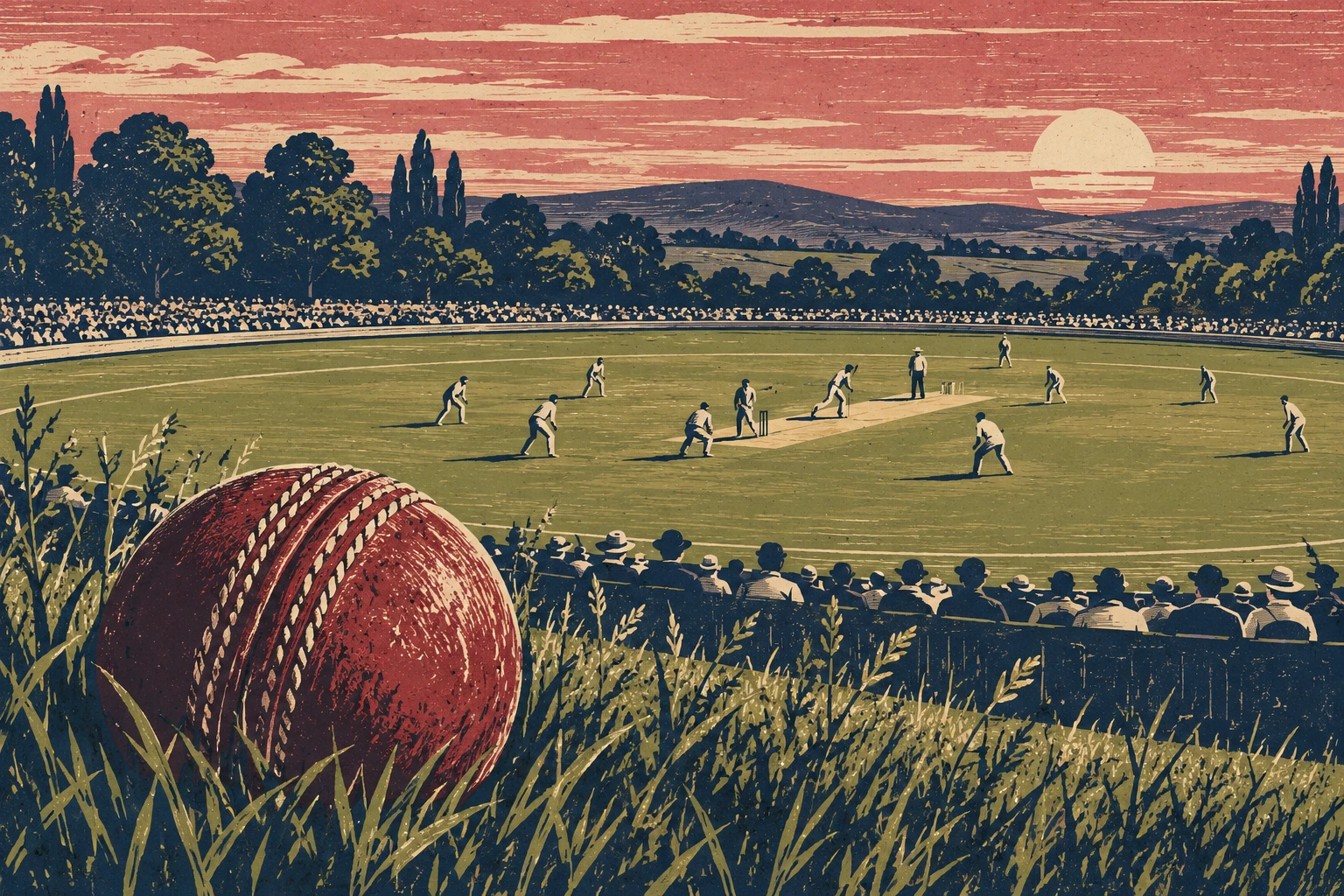
The first innings of a Test, an ODI chase and the final overs of a T20 can all produce the same score but tell different stories. Cricket’s format gives each number its context. Runs and wickets record what has happened; the innings and overs show where that record sits in the match.
Rajabets is an independent information publication. Its current public page describes account panels as previews and says account access and transactions are not connected. This article explains cricket formats and does not establish a current fixture or betting market on this site.
Test cricket and the longer contest
The ICC’s overview of international formats describes Test cricket as normally played over five days with two innings for each side. A Test scorecard can therefore contain more than one innings per team. A first-innings lead is a stage of the contest, not necessarily its end.
A team total should be read with its innings label. Runs accumulated in the opening innings and runs made during a final chase belong to different stages. Wickets and the time remaining help describe the match position, while the competition’s playing conditions govern the actual event.
A match report may also follow partnerships and bowling spells. A partnership records runs added while two batters are together. A bowler’s figures describe overs, runs conceded and wickets. These details help explain how the team total developed rather than replacing it.
The ODI’s 50-over structure
The ICC describes a One Day International as a one-innings match normally allowing 50 overs per side. The batting side builds a total within that allocation, subject to the match conditions. The other side may then chase a target.
A score of 140 means more when paired with overs completed and wickets lost. A team reaching that number early in the innings is in a different position from a team reaching it near the end of its allocation. In a chase, the target and overs remaining provide another layer of context.
An innings may finish before all available overs are used. A scorecard records the actual event, while the general format describes the intended structure. A named match’s conditions and record remain the proper sources for its result.
T20 and a shorter innings
A T20 International normally allows 20 overs per side, according to the ICC. The shorter allocation changes the frame in which a total is read. Each over represents a larger share of the innings than in an ODI, though the score and wickets still need to be read together.
A chase can be followed through the runs needed and the overs remaining. Those figures describe the current position; they do not guarantee how the next delivery or the innings will end. A scorecard also distinguishes the team total from an individual batter’s score.
The name of the competition and the date matter when discussing a particular match. A schedule can change, and a current listing is needed for a specific fixture. This general format comparison does not assert one.
Match conditions and market terms
The ICC maintains playing conditions for different competitions and formats. A broad format description and the applicable conditions work at different levels. The latter, together with the official match record, establishes the sporting result of a named contest.
Where a separate service offers a betting market, its selections and settlement conditions belong to that service. An interrupted match illustrates the distinction: the competition’s rules determine the sporting record, while the market’s terms describe how a selection is handled. A match score alone does not establish those terms.
A competition table may combine several match results. It can show standings across a tournament, whereas a scorecard describes one contest. The competition regulations explain how points or positions are determined.
Following a scorecard
A team score and an individual score describe different parts of an innings. The team figure records the total, while a batter’s runs are one contribution. Wickets indicate how many batters have been dismissed. Overs completed help place that score within a limited-overs allocation.
The scorecard can also list a partnership and a bowling spell. A partnership follows runs added by two batters while they are together; bowling figures describe the bowler’s overs, runs conceded and wickets. Reading the headings keeps those numbers attached to the correct match and innings, especially when a competition has several fixtures close together.
Cricket alongside casino games
Teen Patti, Andar Bahar, Rummy, live casino and slots offer different formats. These subjects have different sequences. A three-card hand is compared under a game hierarchy; a slot uses its own paytable; a cricket total belongs to an innings and match format.
The distinction gives each category its character. A live table may present a card deal or roulette spin; a cricket contest can develop across many overs. The rules for a particular game or competition provide the details behind its display.
Any promotion or payment method depends on the responsible service, eligibility and current terms. Gambling carries a risk of loss. A prior score or match result does not guarantee a later outcome.